The Effect
A weekend at Lodge at Marconi, and the ground underneath all of it.
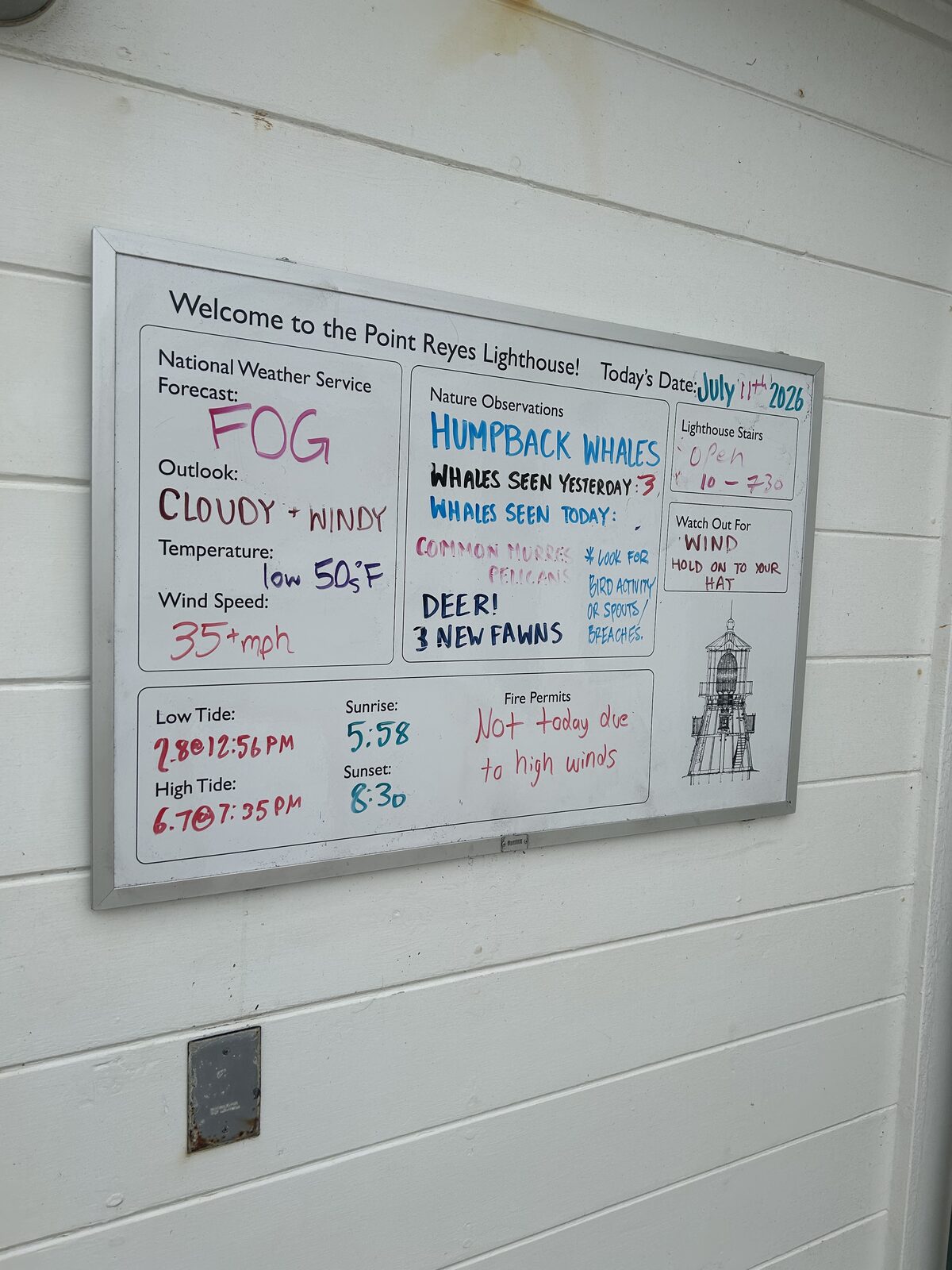
There's a whiteboard outside the Point Reyes Lighthouse that gets updated by hand every morning. Fog. Wind speed. Whales seen yesterday versus whales seen today. Three new fawns. Fire permits denied on account of wind. It's the kind of signage that exists nowhere in my professional life — no dashboard, no automated feed, just someone with a dry-erase marker deciding what mattered enough to write down before the tourists arrived.
I stood there reading it longer than I needed to, because somewhere under my boots was the San Andreas Fault. I spend my weekdays as an infrastructure engineer, keeping a data center and virtualization portfolio healthy for an organization that exists because ground like this eventually moves — systems management, monitoring, installation, patching, all the unglamorous upkeep that goes into running a VMware and Azure environment nobody outside the team ever thinks about. Most of the time that work stays abstract, a change ticket and a maintenance window. Standing on top of the actual fault changes the shape of that thought. It stops being a line item and becomes something you can put a boot on.
The Lodge at Marconi
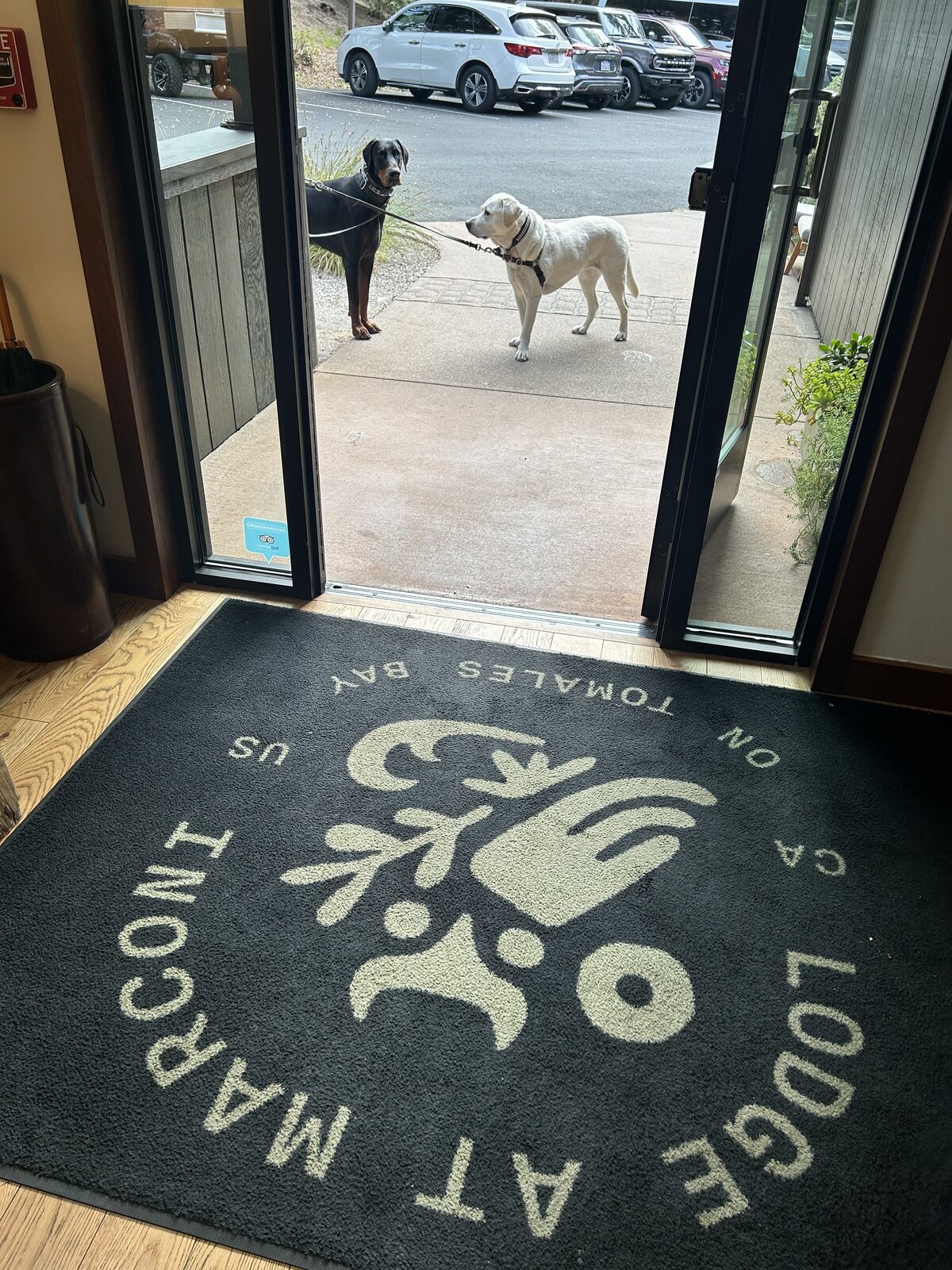
I checked into Lodge at Marconi on Tomales Bay knowing almost nothing about the place beyond the reservation confirmation. The welcome mat should have told me what kind of weekend this was going to be — dogs waiting patiently at the door while their people checked in, nobody in a hurry, the whole property built into a hillside of pine and lichen-draped branches.
The history is the part that got me. This is a California Historic State Park — sixty-two acres, seven of them a designated historic district on the National Register of Historic Places. Long before it was a lodge, it was ancestral land of the Coast Miwok people. Then, in the early 1900s, it became a chain link in Guglielmo Marconi's global wireless communication network — the same Marconi who, in 1901, sent the first transatlantic radio signal 2,100 miles from Cornwall to Newfoundland, and proved along the way that the curvature of the earth wasn't going to stop a signal from getting where it needed to go.
There's something fitting about a ridge that was already in the business of long-distance signal transmission a century before I showed up with a laptop and a blog. Different technology, same fundamental problem: how do you get a message from here to somewhere far away, reliably, when the ground and the ocean and the atmosphere are all doing their best to interfere?
My room key was a real one — brass, on a hand-stamped leather fob. No keycard to demagnetize in a pocket next to a phone, no trip to the front desk when it stops working. Just a key that works because it's a key.
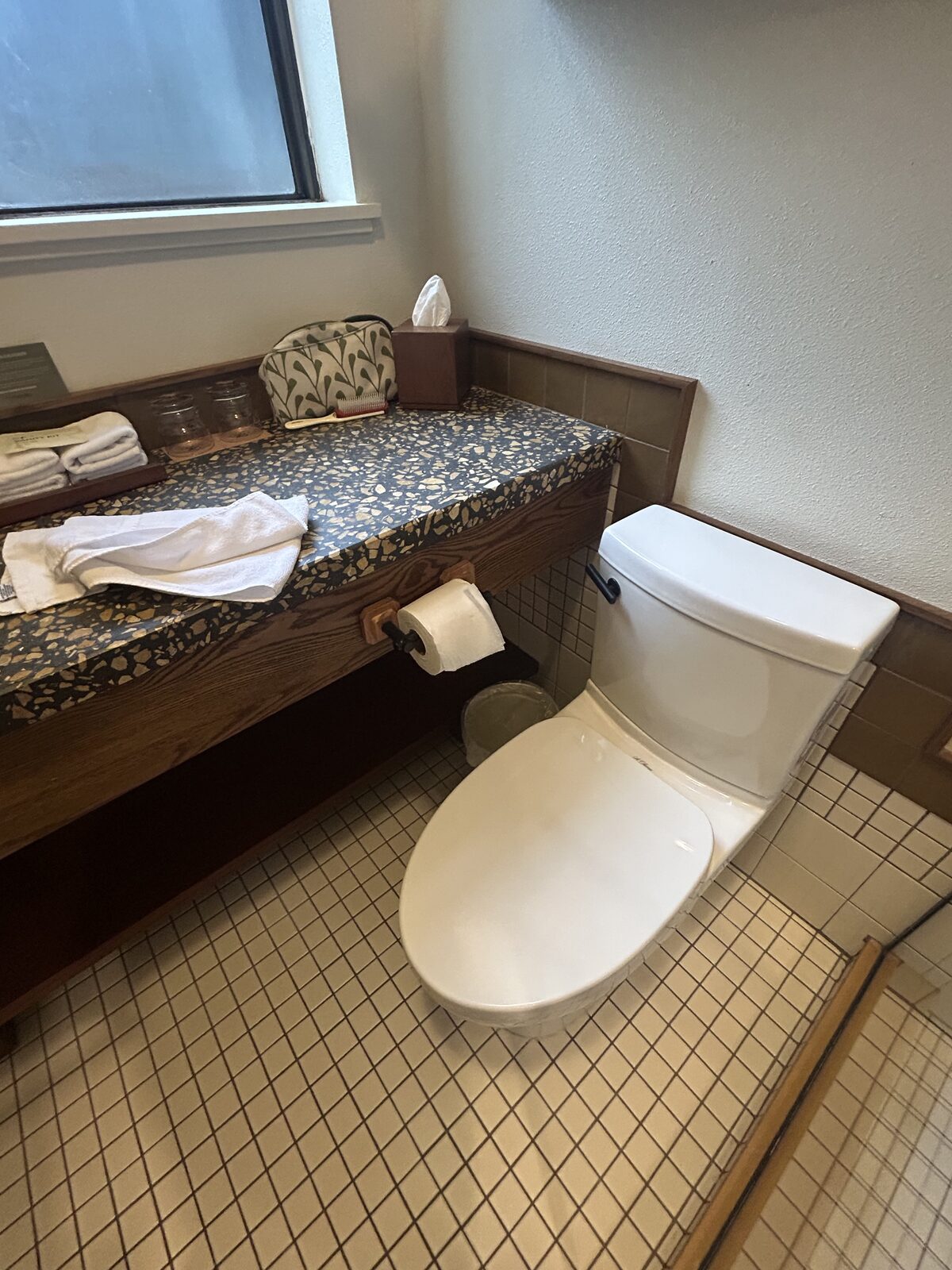
One small disclosure: whoever mounted the toilet paper holder in that bathroom did not account for a grown man's elbow trying to occupy the same corner. I clipped it more than once. A minor hazard rating on an otherwise five-star bathroom.
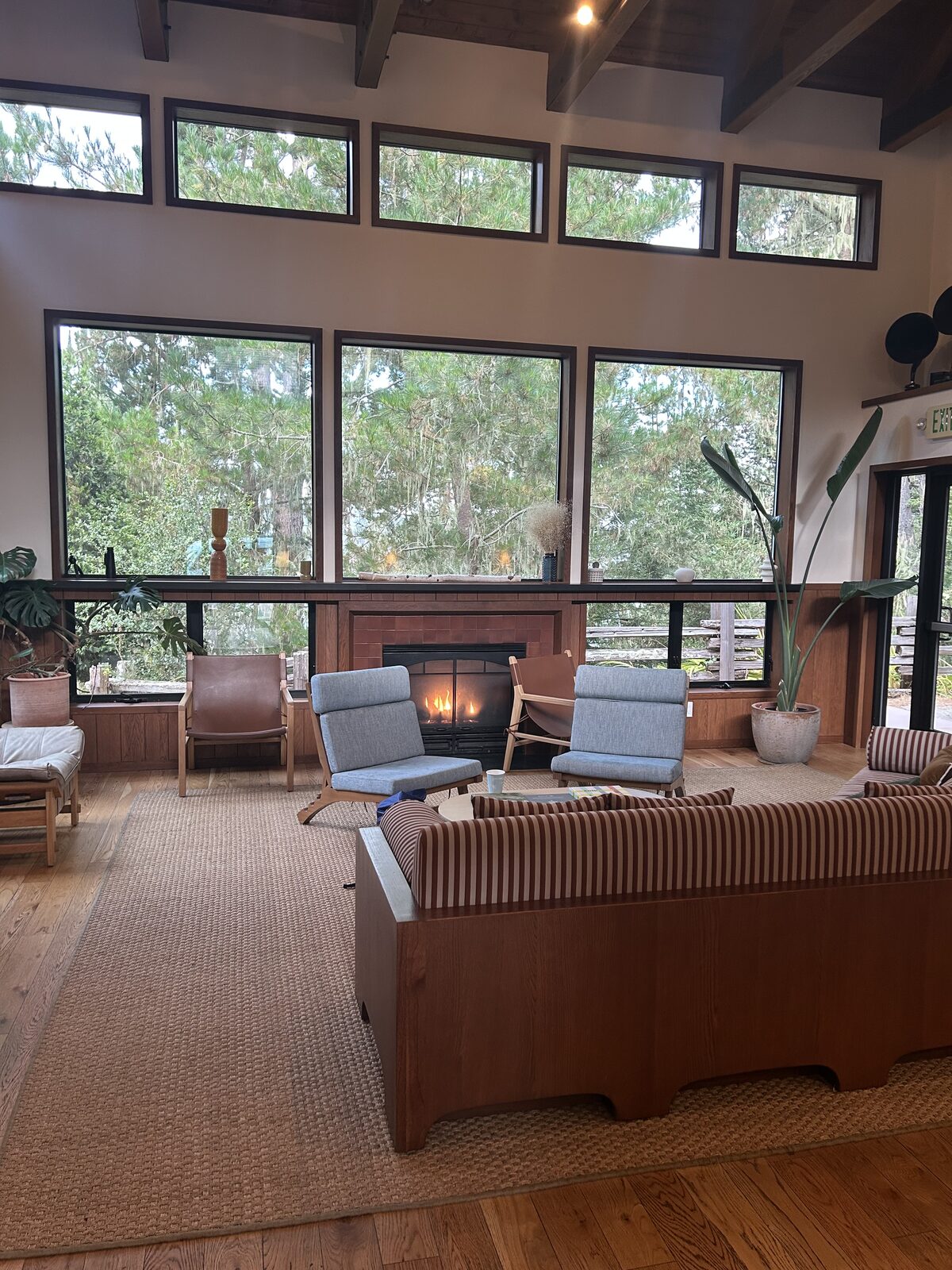
Back in the lodge's own lounge — not the restaurant, just the main lobby common room — a high, beamed ceiling and a wall of windows looked out into pine and moss, with a real fire going in a real fireplace. It's the kind of room that makes you want to sit down with a book you brought and never opened.
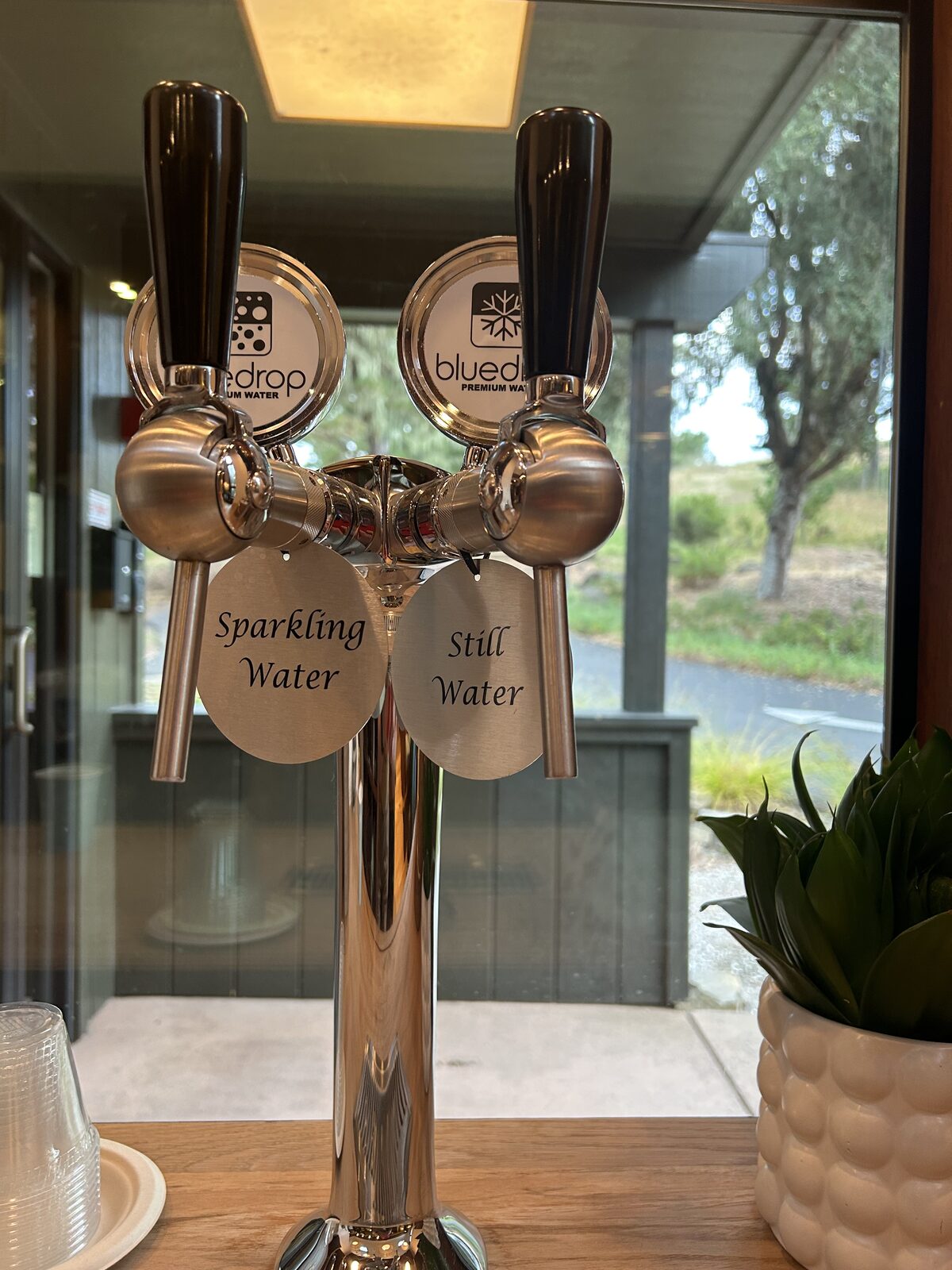
Even the water fountain in that lobby had a little ceremony to it — sparkling on one tap, still on the other, both labeled in a hand-lettered script like it was a wine list. Small detail. I noticed it anyway.
The Hill
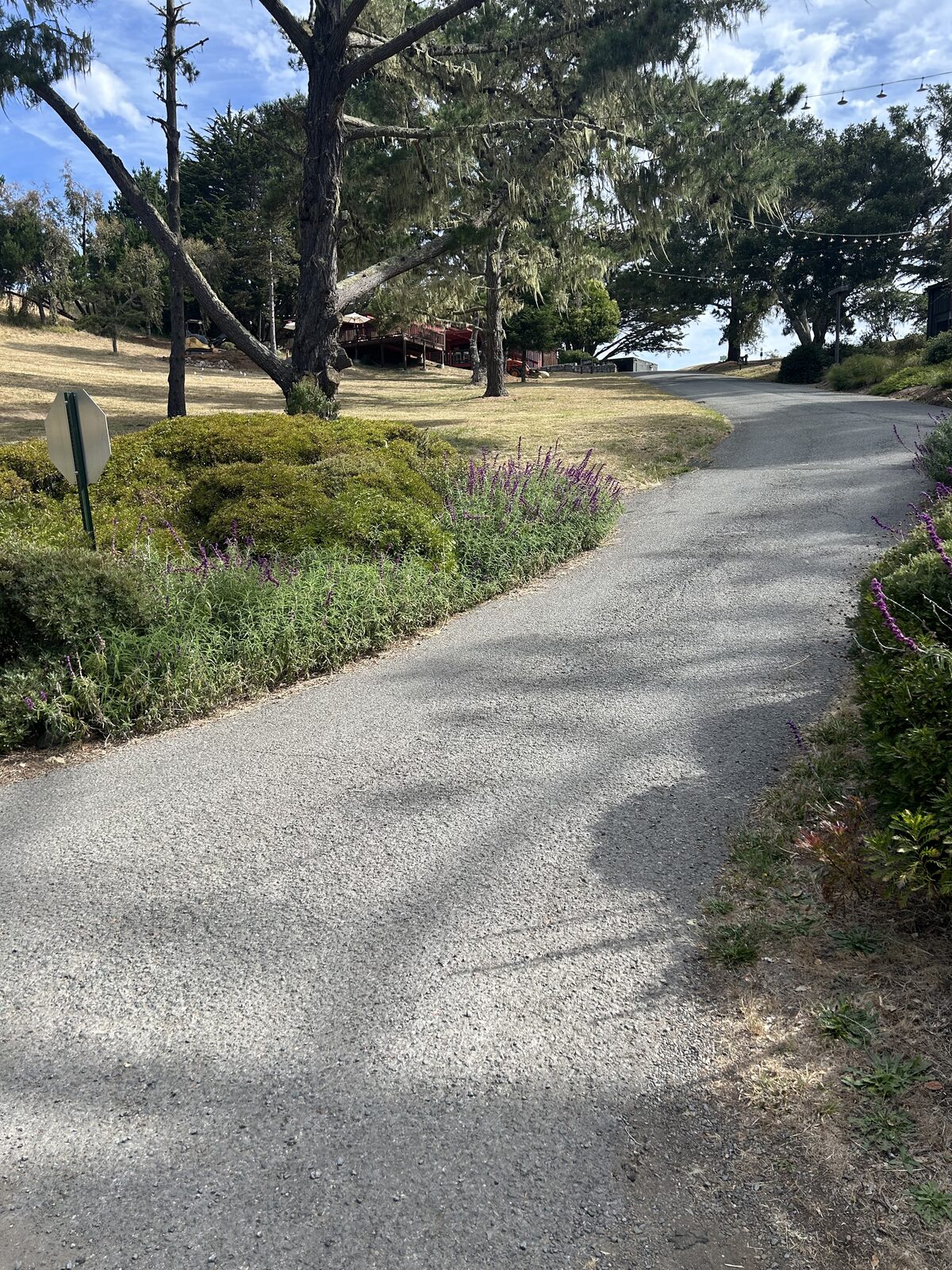
The first night set the tone. We'd spent the day exploring, and by the time we headed to Mable's for dinner, I discovered that the restaurant sits at the top of a climb that looks like nothing in a photograph and feels like something else entirely on foot. I hadn't expected it, and I said as much out loud to whoever was walking next to me.
The next morning, headed back for breakfast, it was the same hill in reverse — down, then, a few hours later, back up again. By the second lap I'd stopped being surprised and started timing myself.
Evenings on Tomales Bay
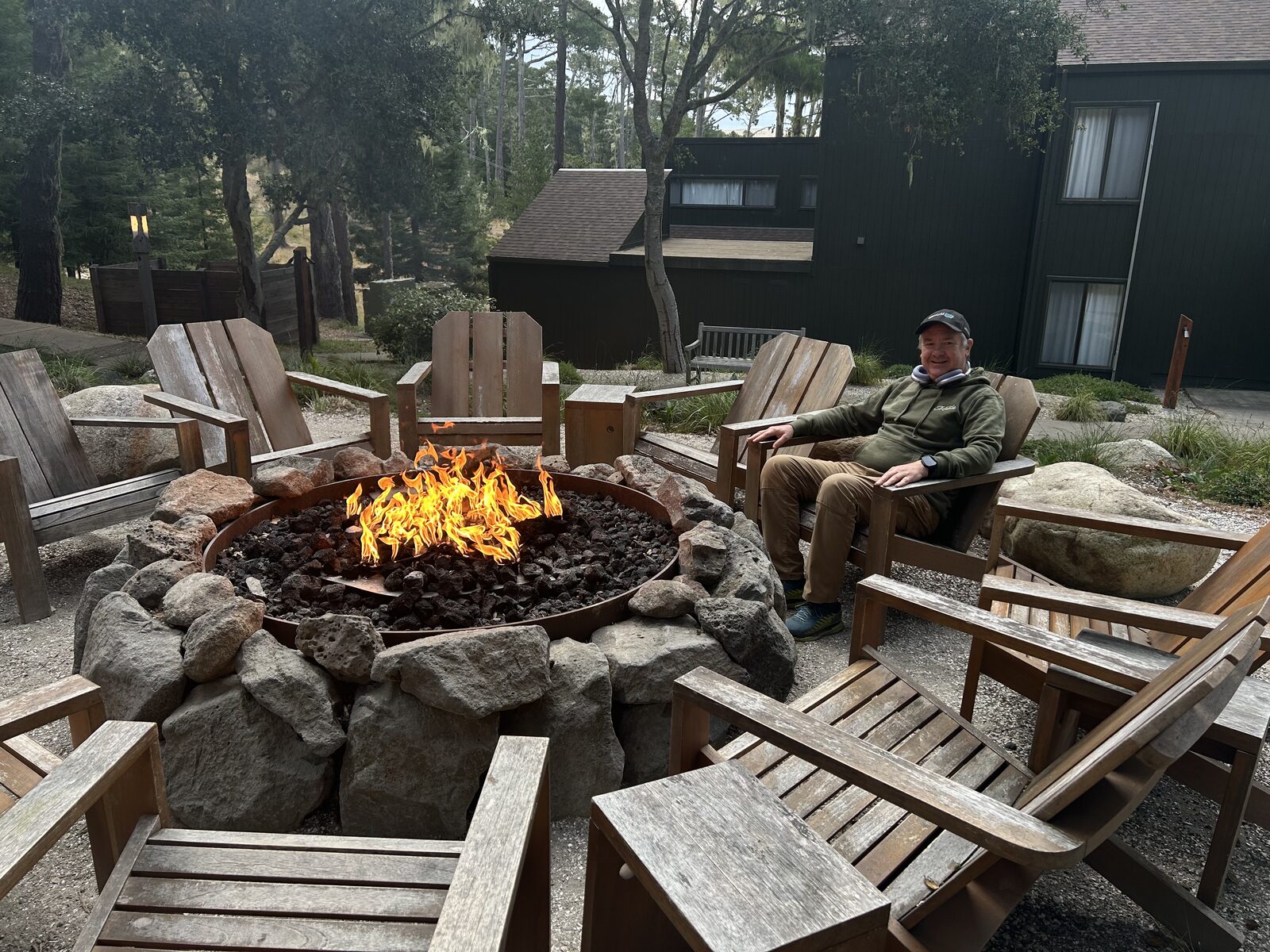
That first night, once dinner was done, a few of us ended up at the fire pit — strangers when we sat down, not strangers by the time the fire burned low. Someone was from Russia. Someone else from Cyprus. A couple of people from Hawaii. And a young guy who just travels, more or less full time, taking his college courses online from wherever he happens to be that semester. Marshmallows on sticks, a slab of Hershey's leaning against a graham cracker, that particular orange light a fire throws just before the sun finishes going down behind the ridge. We covered a fair amount of ground in an hour that had nothing to do with any of our actual homes.
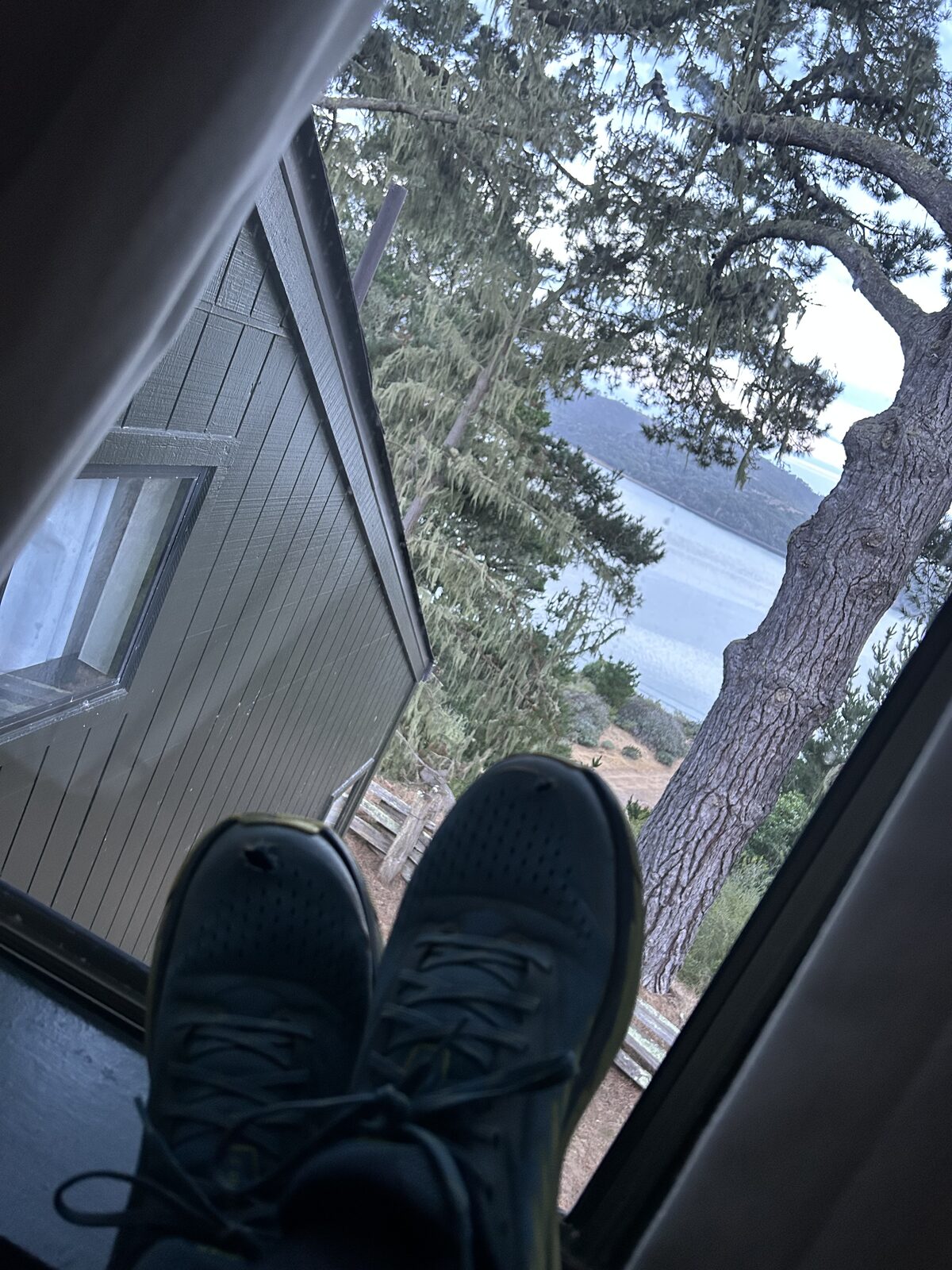
From my room, feet up on the windowsill, I could see straight down through the pines to the bay itself — flat, silver-grey, a hill rising on the far shore like it had been there waiting the whole time. It had.
One More Morning at Mable's
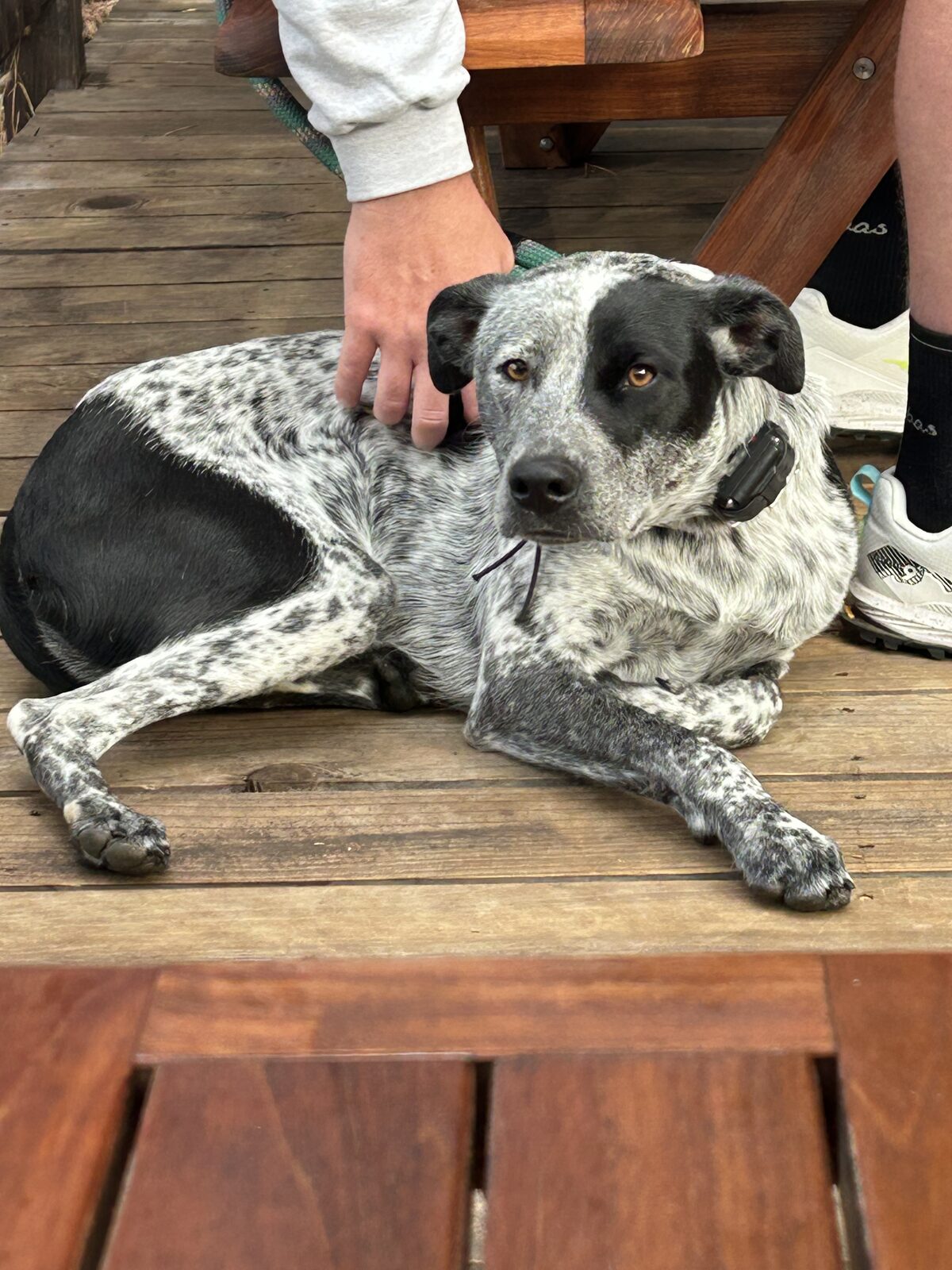
My last morning started with a conversation I didn't have to go looking for. A man came over to the table — either the owner or the general manager of Mable's, I never got entirely clear on which — and gave us a rundown of the finer things to see while we were in the area. He mentioned an app called Merlin that listens to birdsong and tells you what you're hearing; he'd used it at Abbott's Lagoon a few days earlier and counted forty different species in one walk. Abbott's Lagoon was his top recommendation outright — a hike that gives you a brackish lagoon, wetlands, and open Pacific beach all in one trip. He also pointed us toward the Marshall Store, a mile or so north on Highway 1, with the kind of conviction reserved for a place you've been going back to for years. Go early, he said. It gets busy.
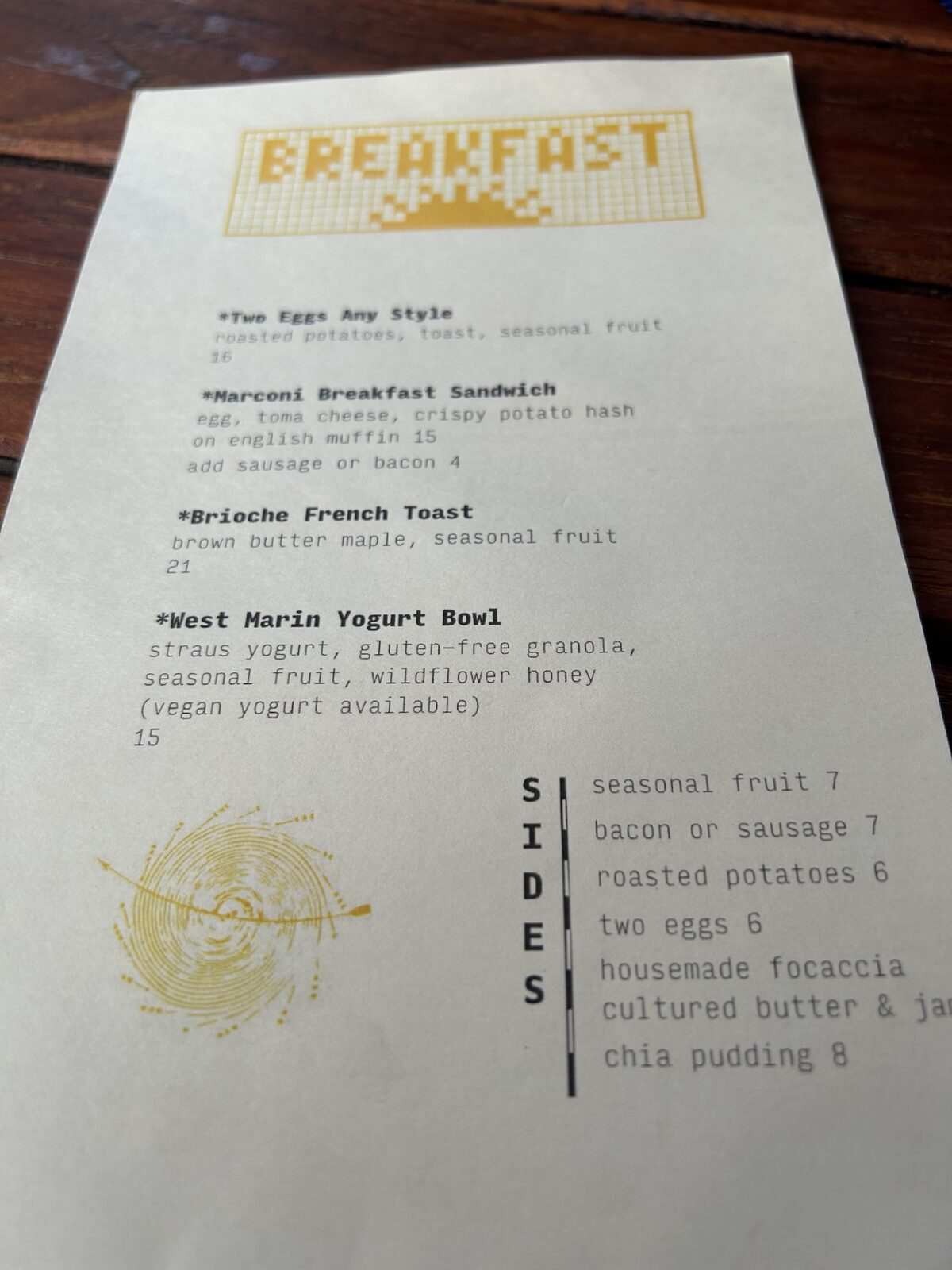
There's a brass sign in the restroom: "Employees Must Wash Hands." Fair enough — except no employee ever showed up to wash mine. I stood there a reasonable amount of time. Nothing. Had to take care of it myself, which rather defeats the purpose of the sign.
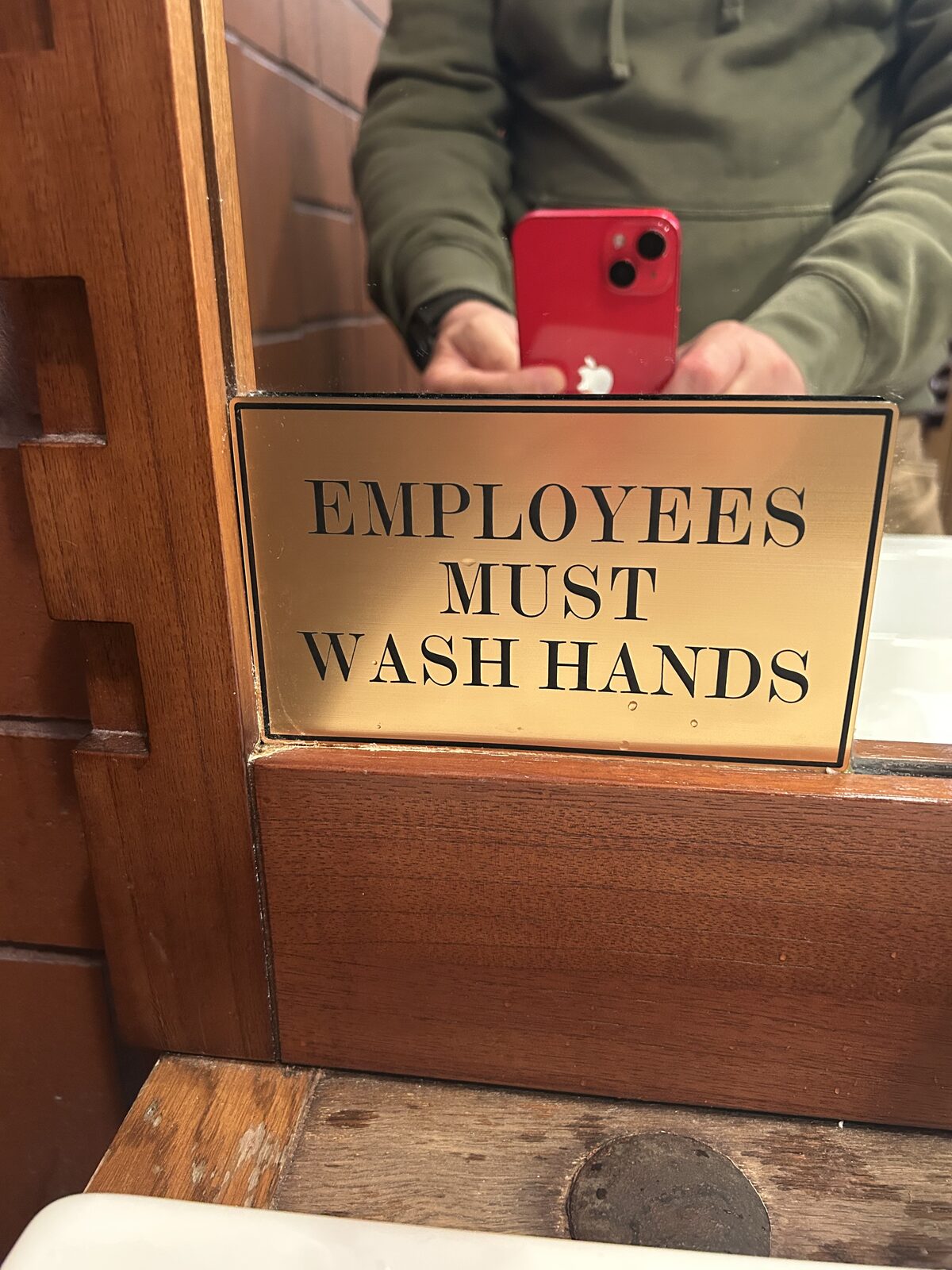
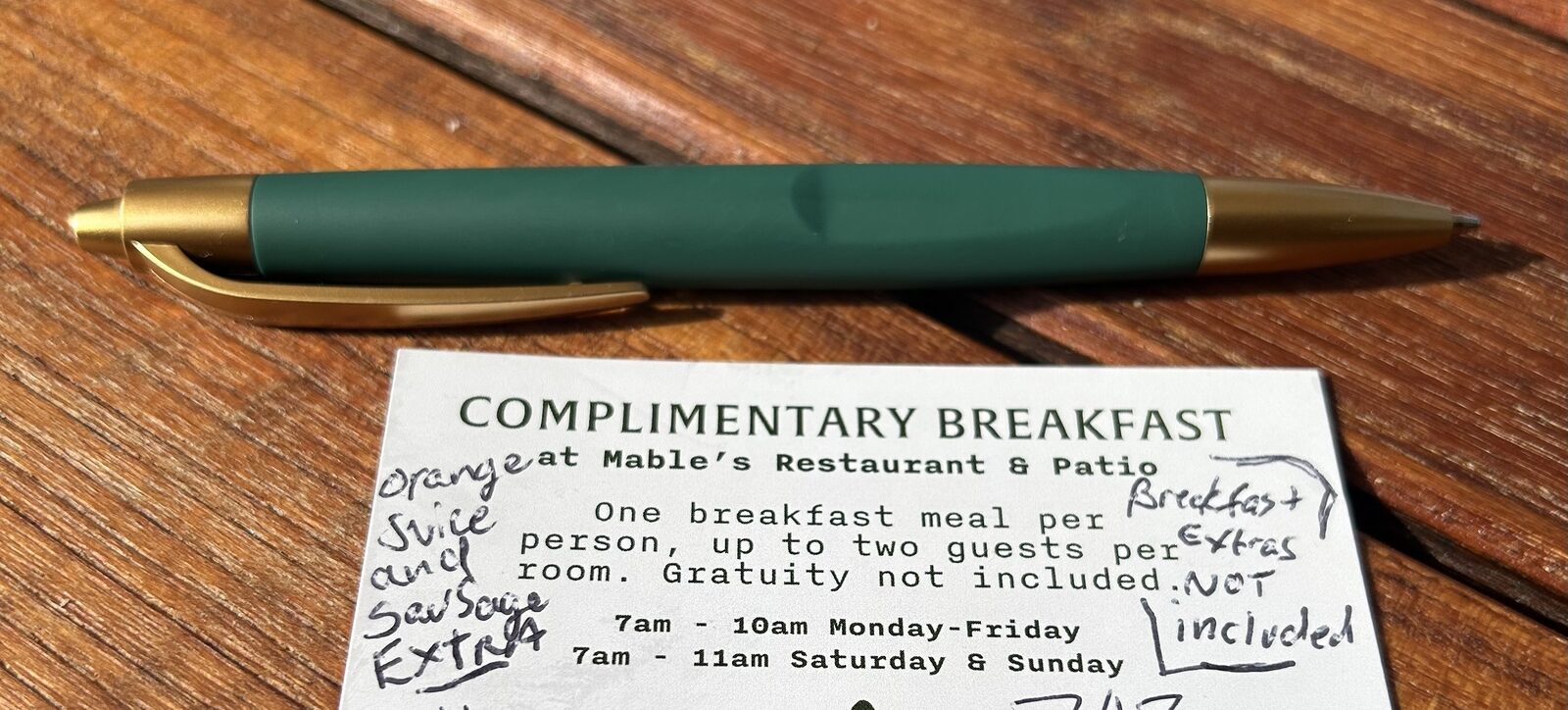
And the card promising a complimentary breakfast had been helpfully hand-annotated by a previous guest — orange juice and sausage, it turns out, are extra, and gratuity is not included. Even paradise itemizes.
I'd come up from Sacramento, where it had been ninety degrees, and packed accordingly — which is to say, wrong. Before heading out that morning, I stopped at the lodge shop and picked up a sweater against the wind.
Abbott's Lagoon
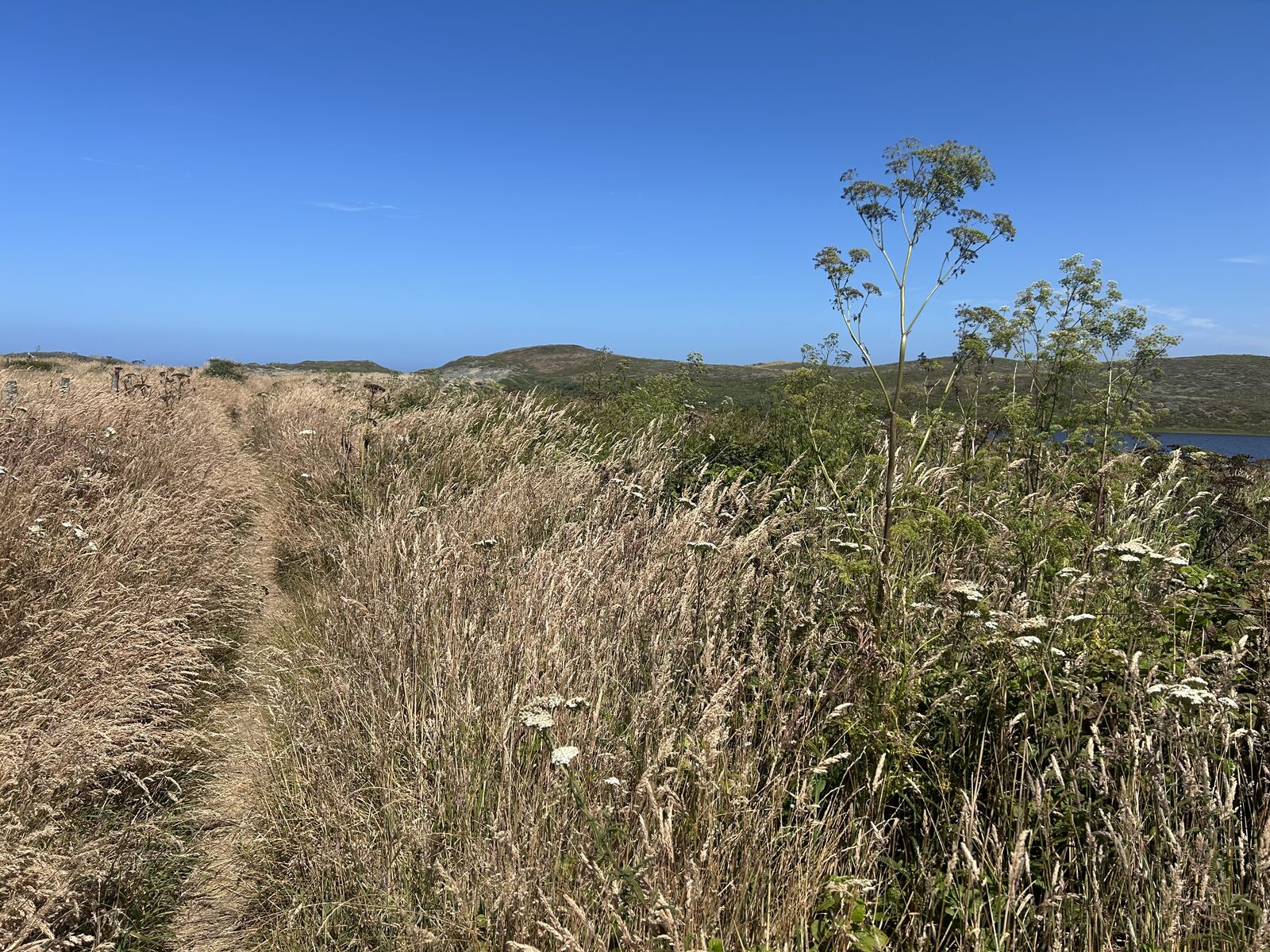
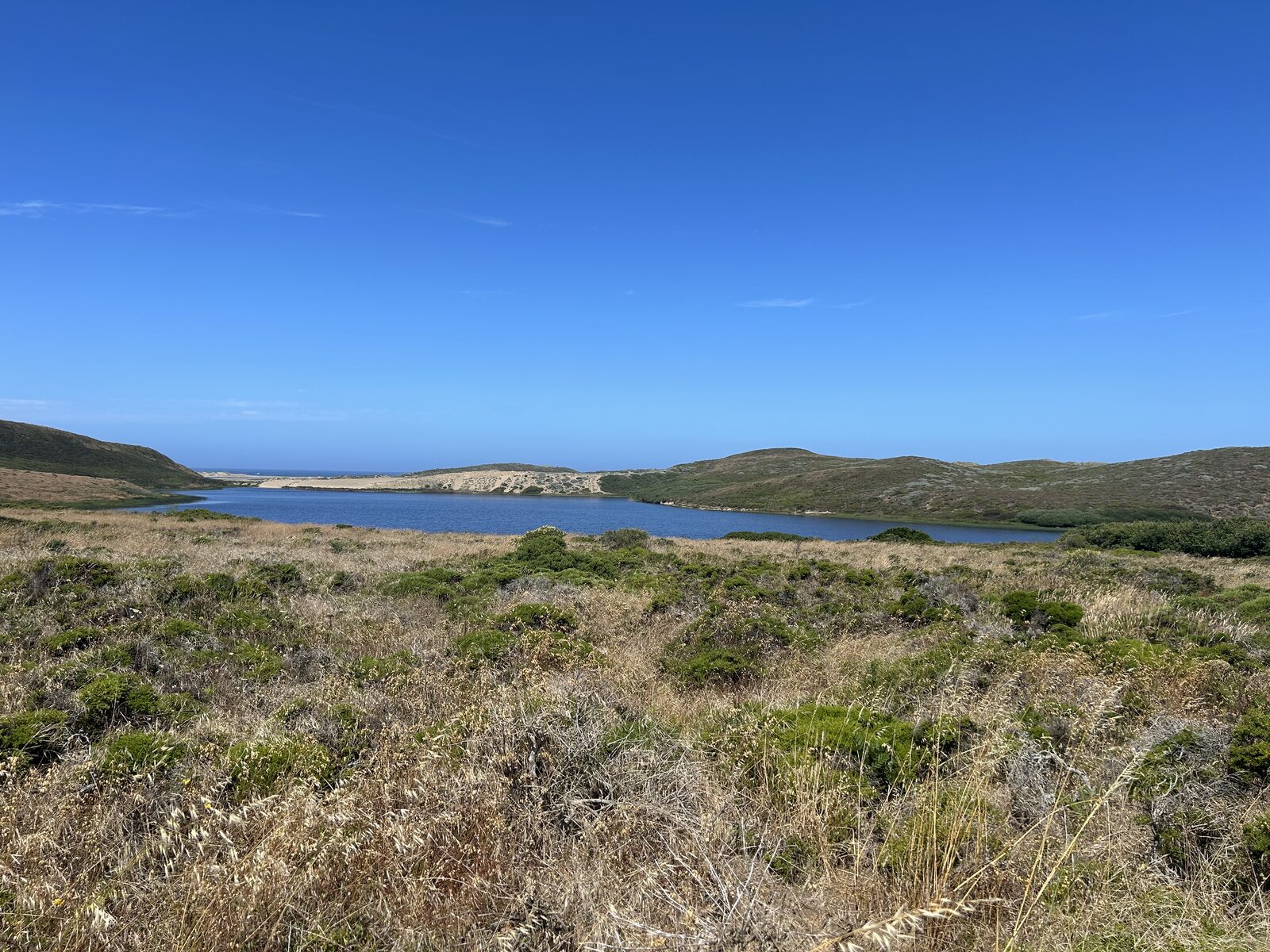
The trail out to Abbott's Lagoon is an easy one — no switchbacks, no real elevation to speak of, just a path through tall dry grass that leans whichever way the wind's blowing that day. The land opens up all at once, and the lagoon appears blue and still, dunes rising white-gold between the water and the Pacific beyond it.
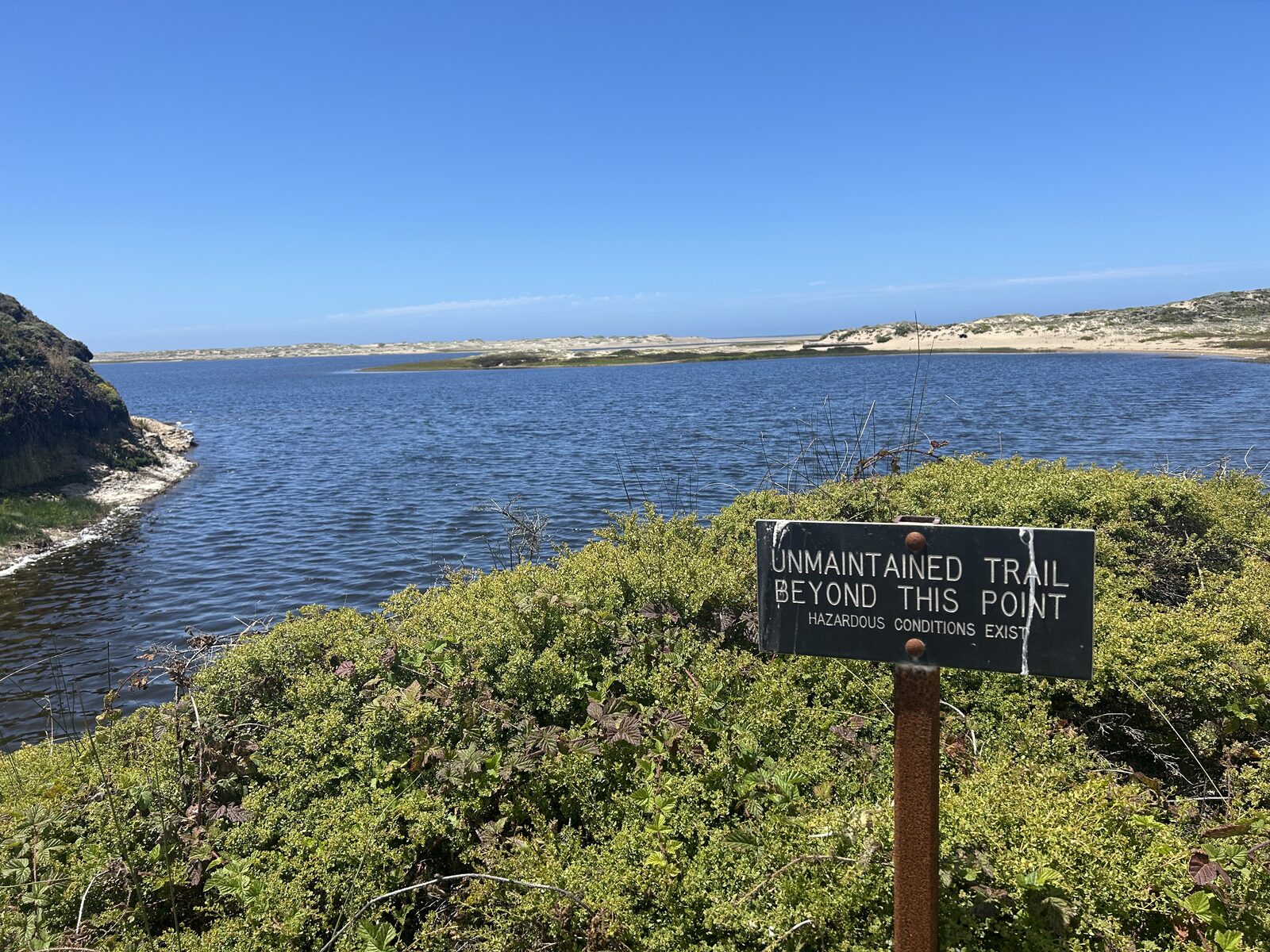
There's a sign partway along, black and rust-streaked, that reads: Unmaintained Trail Beyond This Point. Hazardous Conditions Exist. I stood there a minute longer than the sign probably wanted me to. It's a small, ordinary piece of trail infrastructure — the kind of warning you see a hundred times and don't think about. But standing on ground that sits this close to a major fault, it read differently. Somebody, somewhere, is always deciding where the maintained ground ends and the hazard begins.
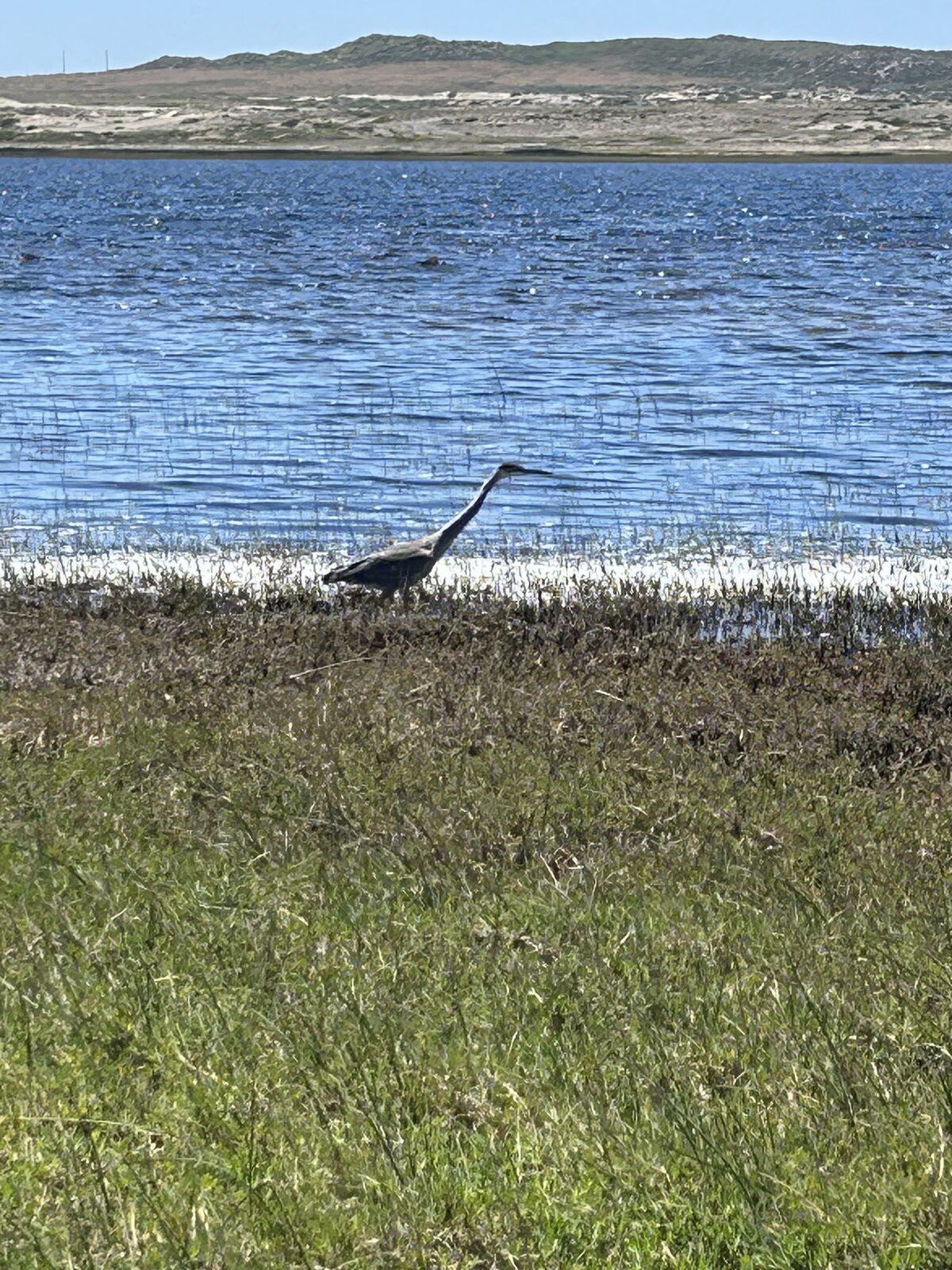
A great blue heron worked the shoreline, patient in the way only a bird that fishes for a living can be — perfectly still, then gone, then still again somewhere else. It wasn't the only company out there. A herd of elk grazed a distant hillside, rabbits kept breaking from the grass ahead of me, at least one fawn still young enough to have its spots watched me pass, and a snake and a lizard both held their ground on the trail like they'd been there first. Between that, the birds, and the dogs working the lobby back at the lodge, the wildlife outnumbered the guests most of the weekend.
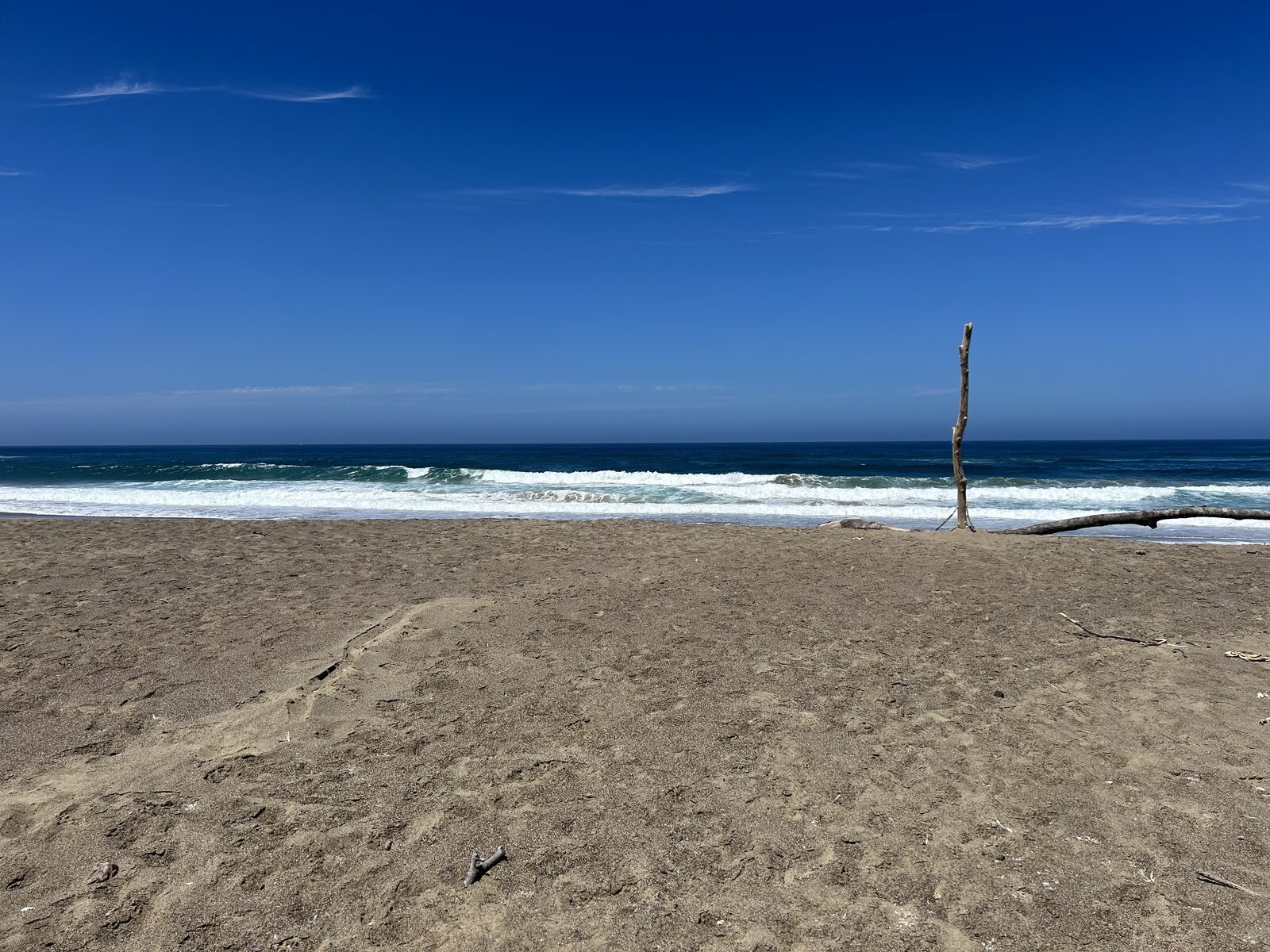
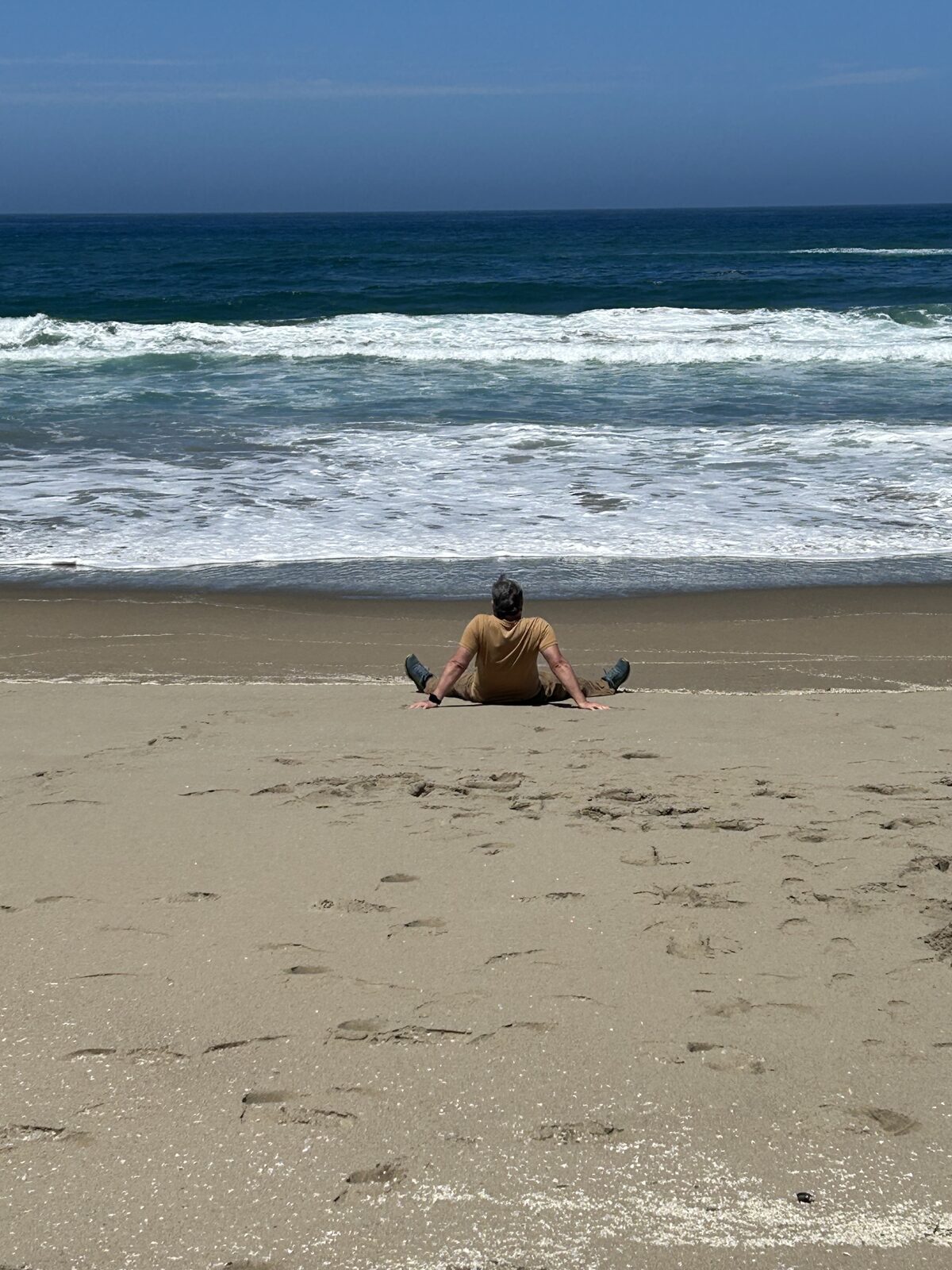
The only real work of the day came where the trail gives way to sand, as it turns toward the Pacific. That stretch takes something out of your legs that packed dirt never does — soft, shifting, no firm push-off with each step. By the time the beach opened up, empty except for a single weathered post of driftwood standing upright like someone meant to mark something and never came back to finish the job, I was glad to sit down and do nothing for a while facing the water.
Then it was back the way I came — sand first, then packed trail, then, one more time, that hill up to Mable's for dinner. Third lap. I'd stopped being surprised by then, but my legs hadn't.
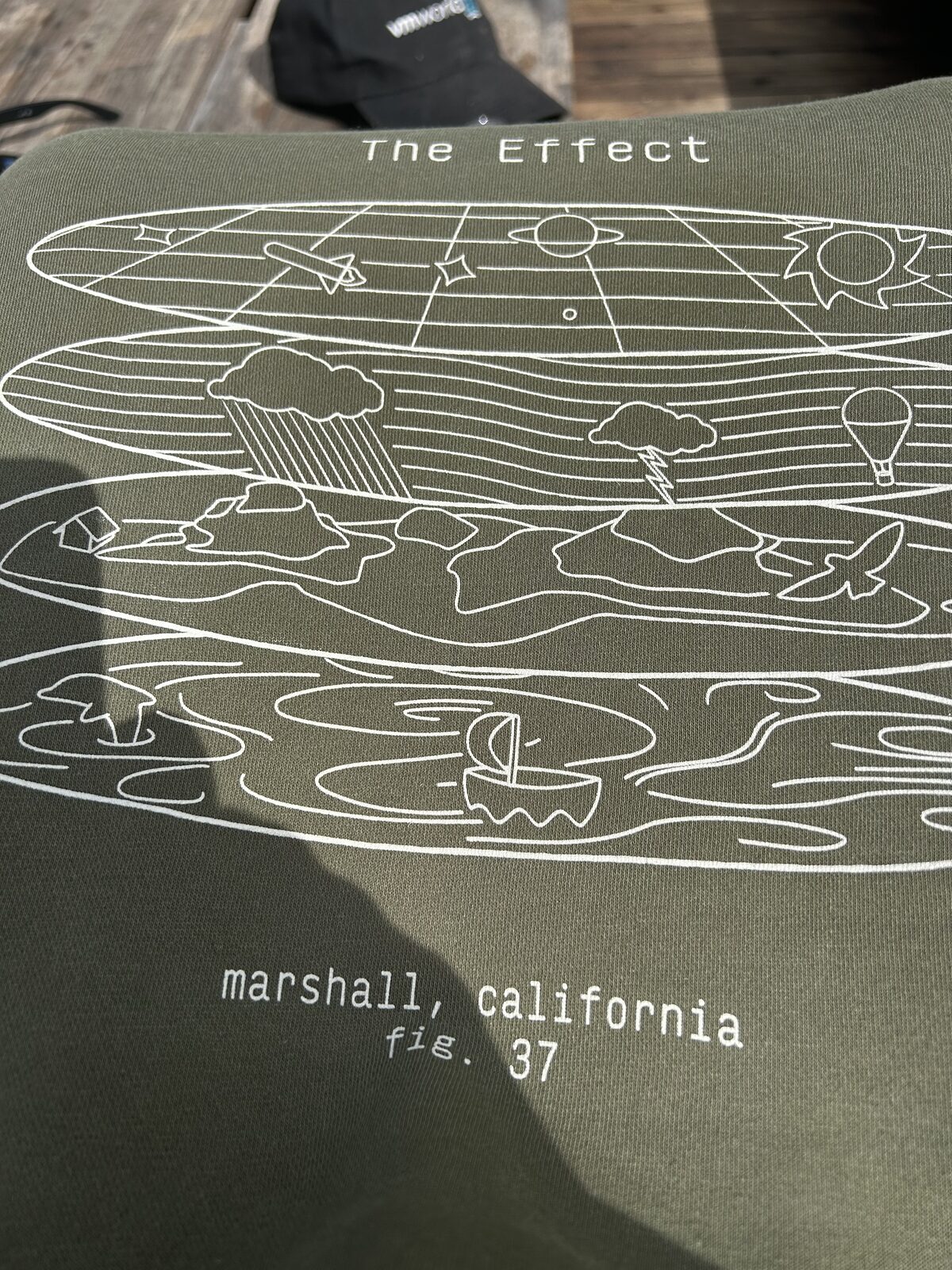
The sweater from that morning turned out to have more to say than I expected. The graphic on the back is laid out like a page from an old field guide — "fig. 37," it says, "marshall, california" — a cross-section of the world from top to bottom. Stars and a ringed planet up top. Clouds, lightning, and a hot air balloon working through the weather in the middle, mountains rising underneath it. Open water and a sailboat at the bottom, carrying the whole scene. The whole thing is titled, simply, The Effect.
It's a good way to think about this place. Everything above eventually reaches what's below. Weather becomes coastline. Pressure becomes movement. What happens far away and out of sight still ends up, eventually, at ground level — where somebody has to be ready for it.
Where This Ground Leads
The infrastructure I look after isn't glamorous, and most days nobody outside the team thinks about it at all — which is exactly the point. Patching, monitoring, keeping the virtualization layer healthy, the quiet plumbing that has to keep working when everything else is chaos. It's easy for that to stay abstract when the closest I get to "the ground moving" is a maintenance window on a Tuesday. It stops being abstract when you've spent a weekend walking directly on top of the fault that makes the job necessary in the first place.
Point Reyes doesn't let you forget what's underneath it. The whiteboard tracks whales and wind speed because those are the things visitors can see. The fault line doesn't get its own line on the board, because most days it doesn't need one — it just sits there, doing nothing, the way infrastructure is supposed to do nothing until the day it doesn't. That's the job, whether you're talking about a fault line or a data center: build for the quiet, plan for the day it isn't quiet anymore.
Heading Home
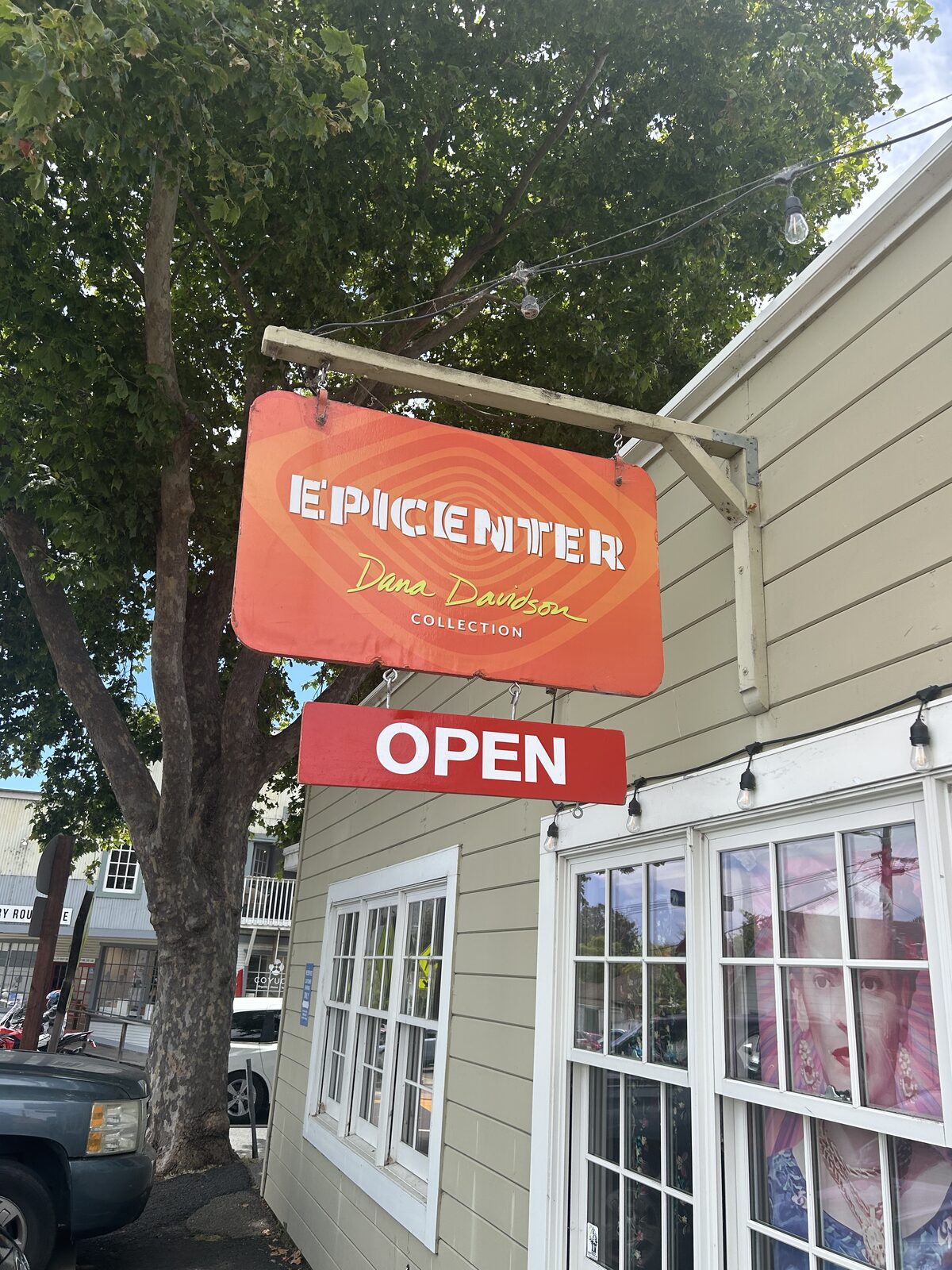
On the drive out, back through the little strip of shops on Highway 1, I passed a storefront with a bright orange sign hanging over the sidewalk. EPICENTER, it read, OPEN sign glowing red underneath it. A clothing boutique, as it turned out — nothing to do with seismology at all.
I sat with that for a mile or two before I laughed. You spend a weekend walking a fault line, thinking about the ground moving, and the universe hands you a punchline on your way out of town. Sometimes the effect really does reach everywhere.